Sales pitch examples built around a buyer's decision
A sales deck becomes more useful when it asks for a specific next step. These three fictional examples cover different buying situations: evaluating support software, renewing a maintenance service and expanding a retail-planning rollout. Each includes a cover and five decision-focused slides.
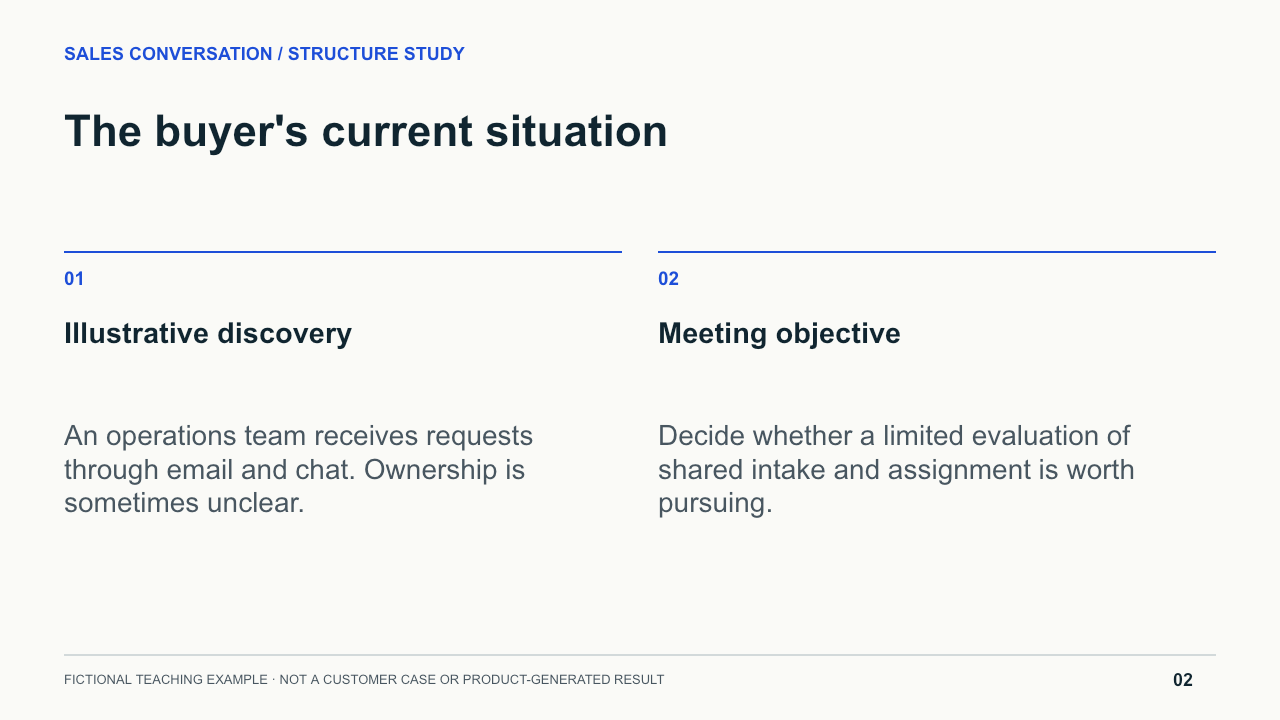
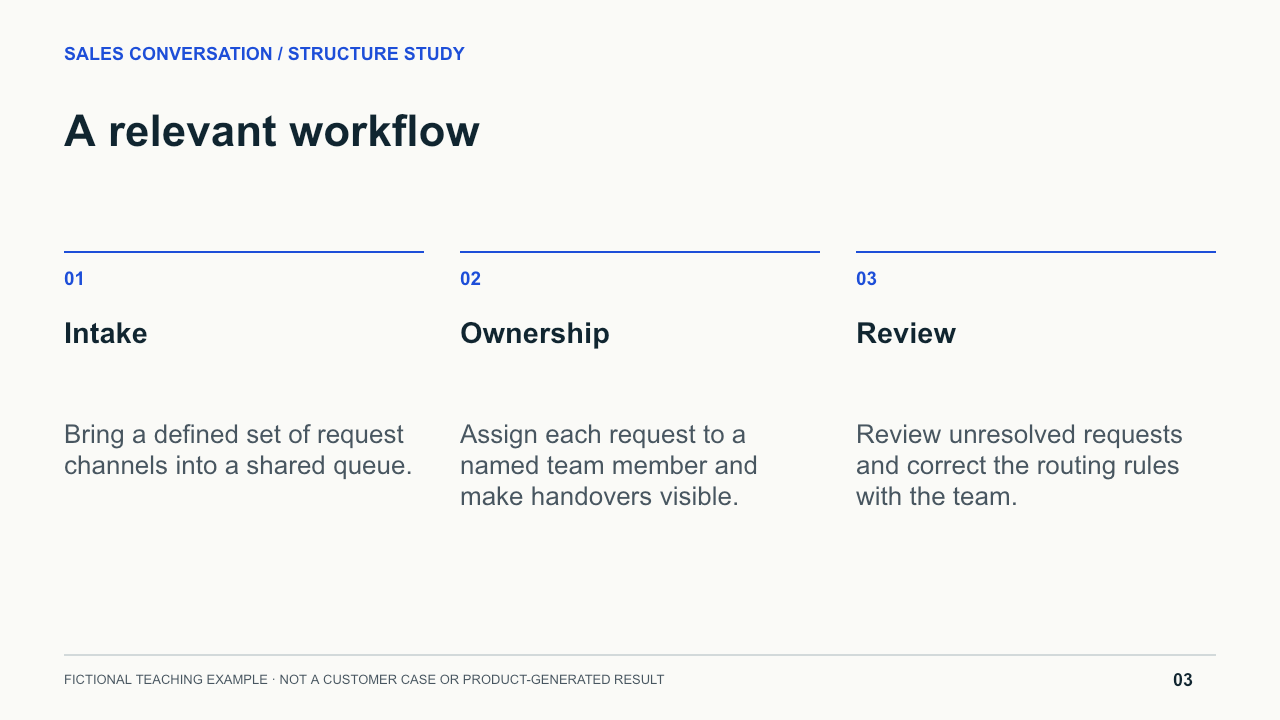
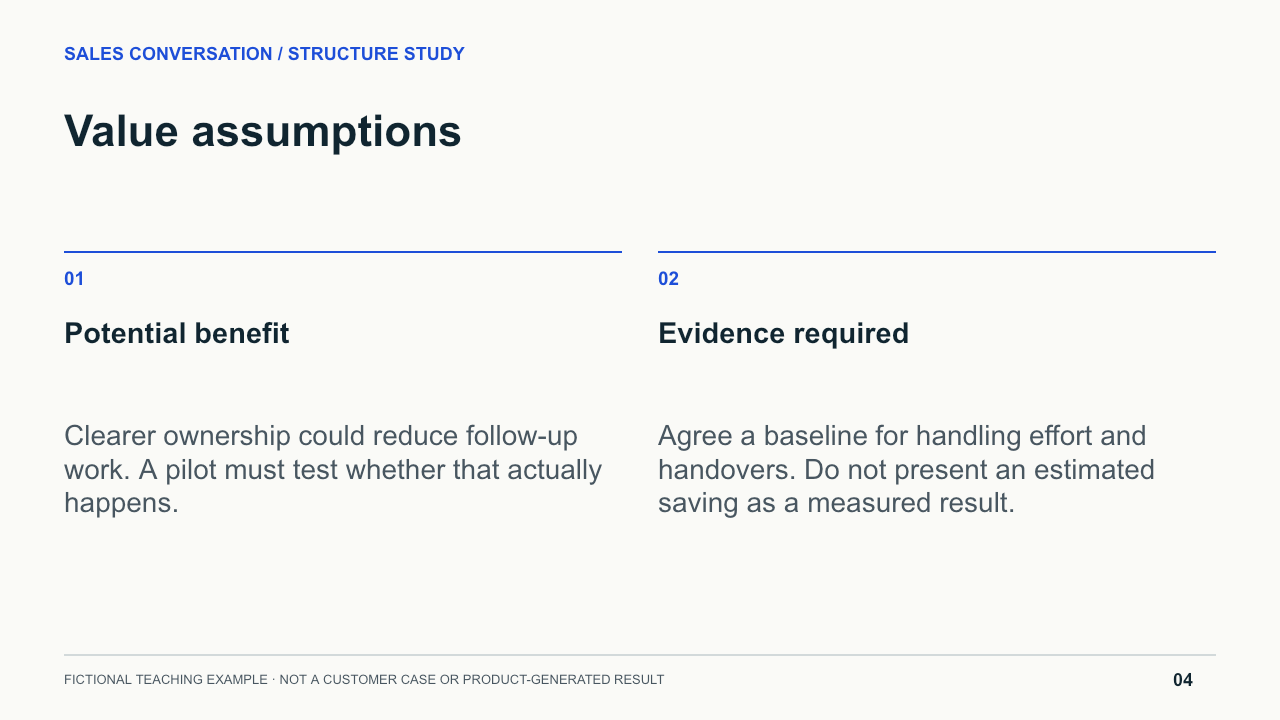
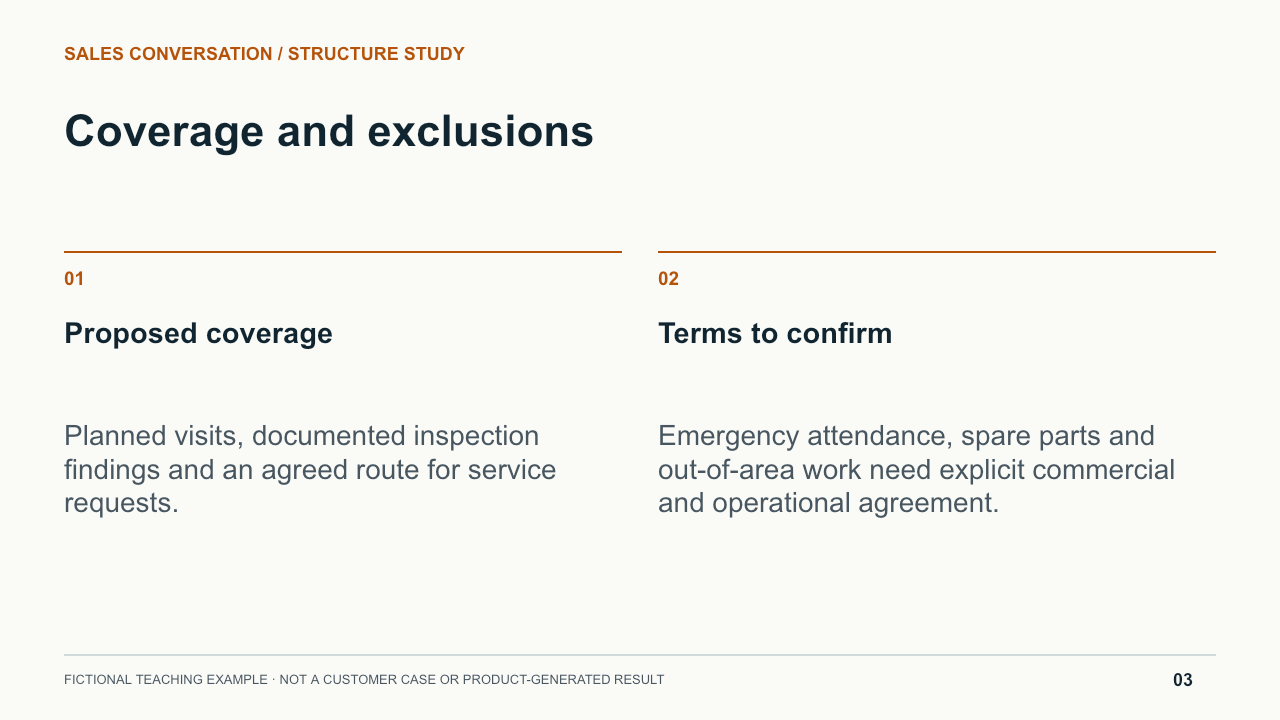
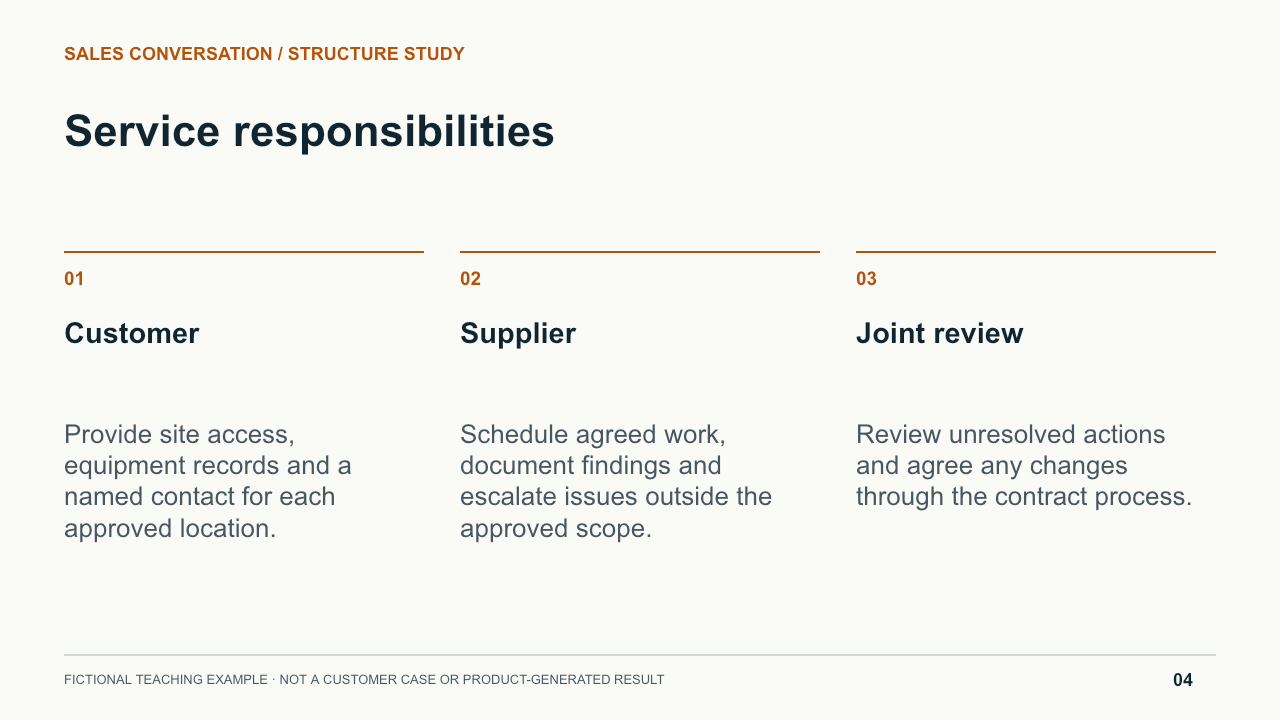
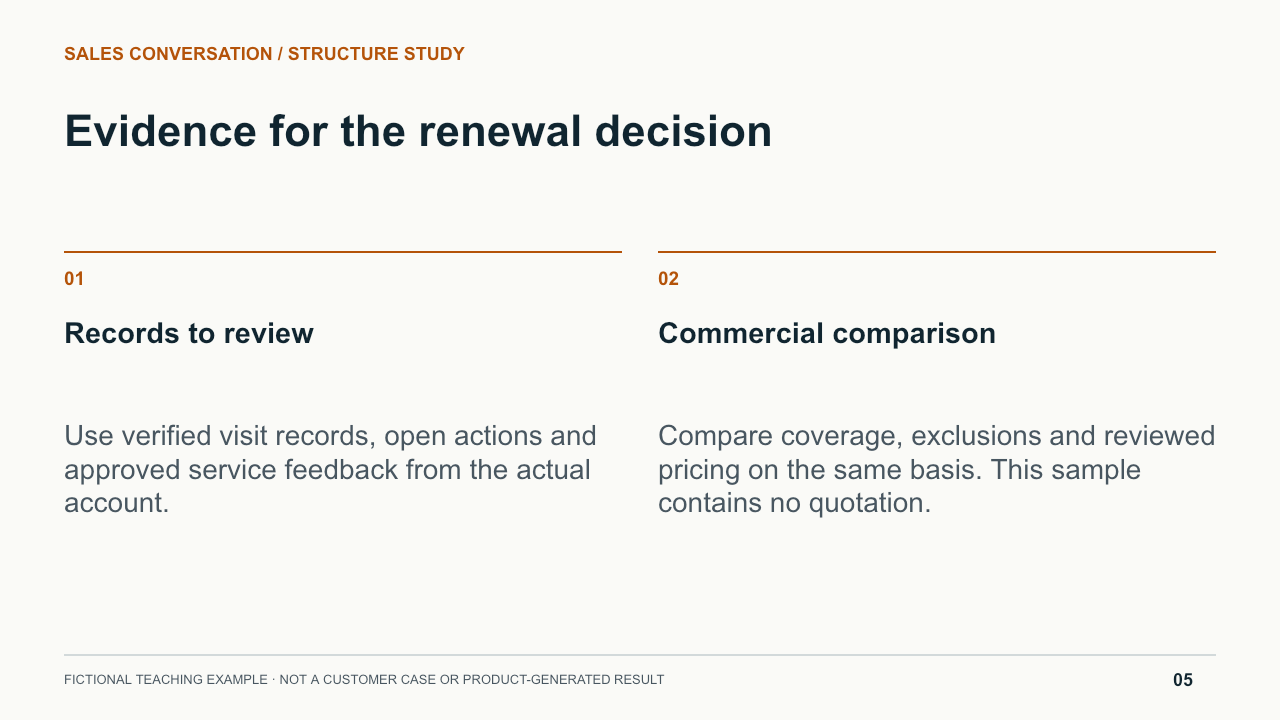
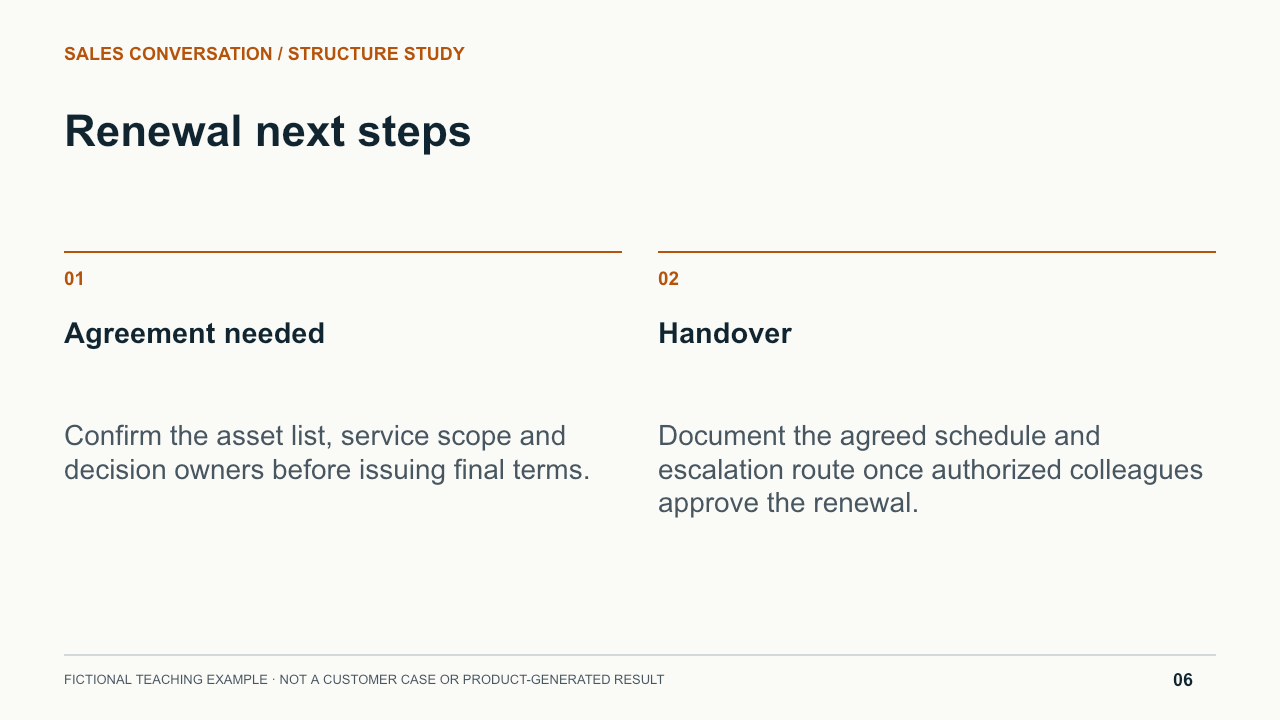
Start with the buyer's situation, not a list of product features. Notice how each example moves from context to a relevant workflow or scope, then to evidence, responsibilities and a next step. An evaluation needs an agreed baseline; a renewal needs account-specific service records; an expansion needs evidence that the first rollout can transfer to other locations.
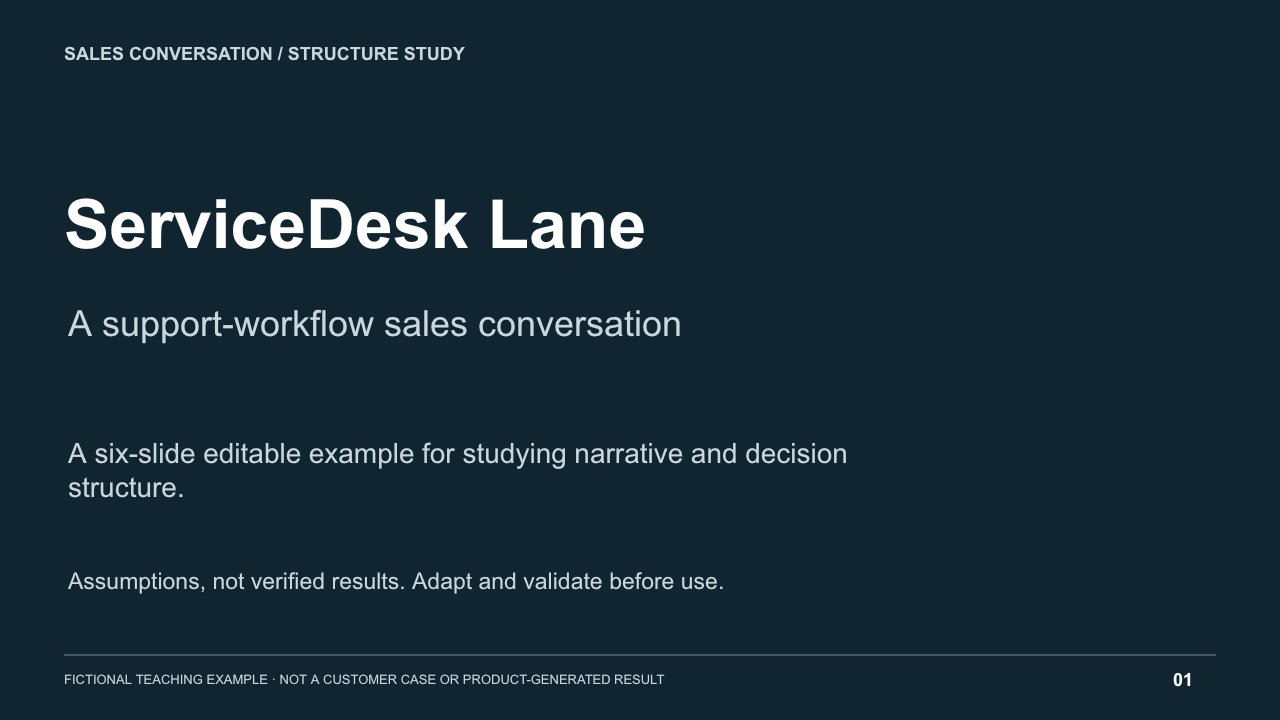
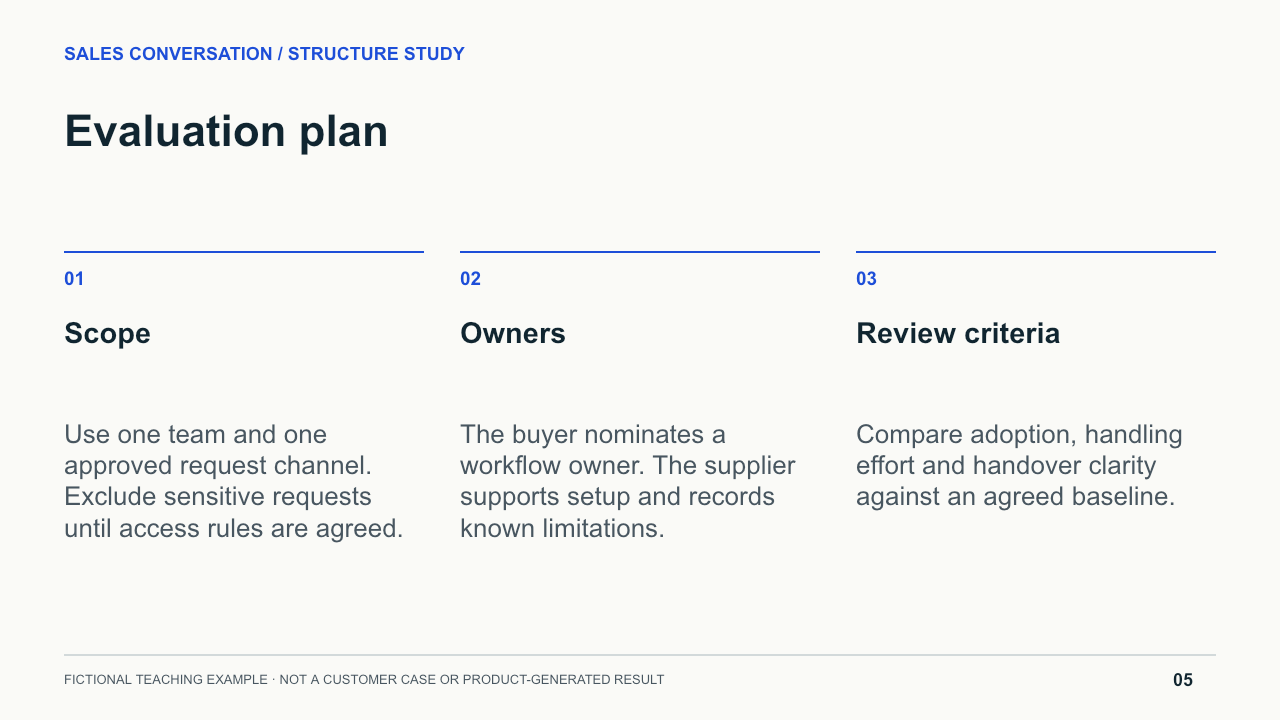
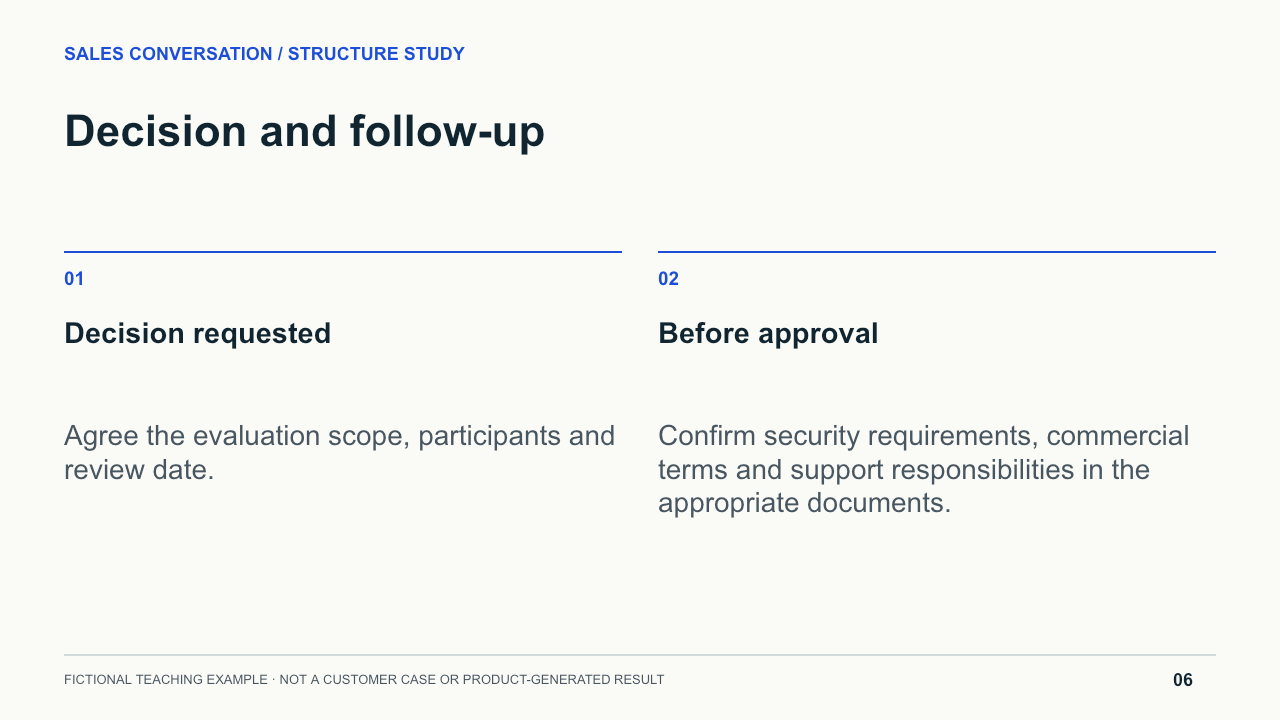
ServiceDesk Lane
A support-workflow sales conversation
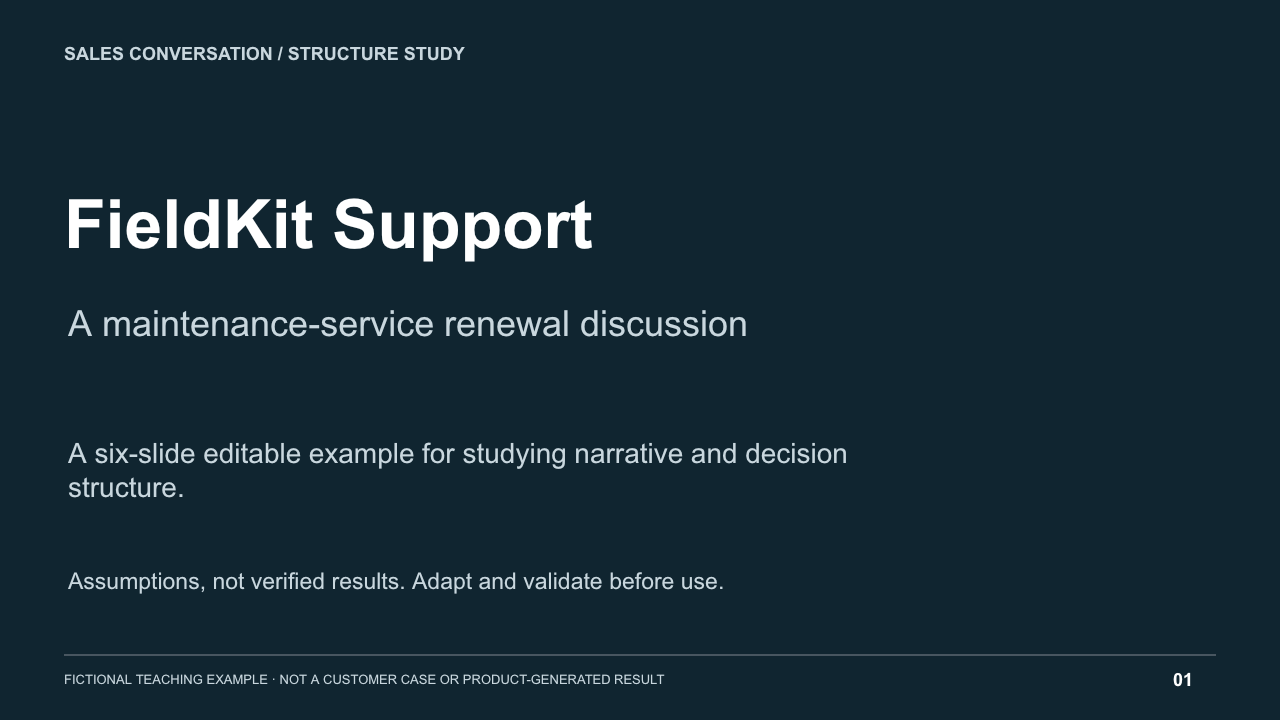
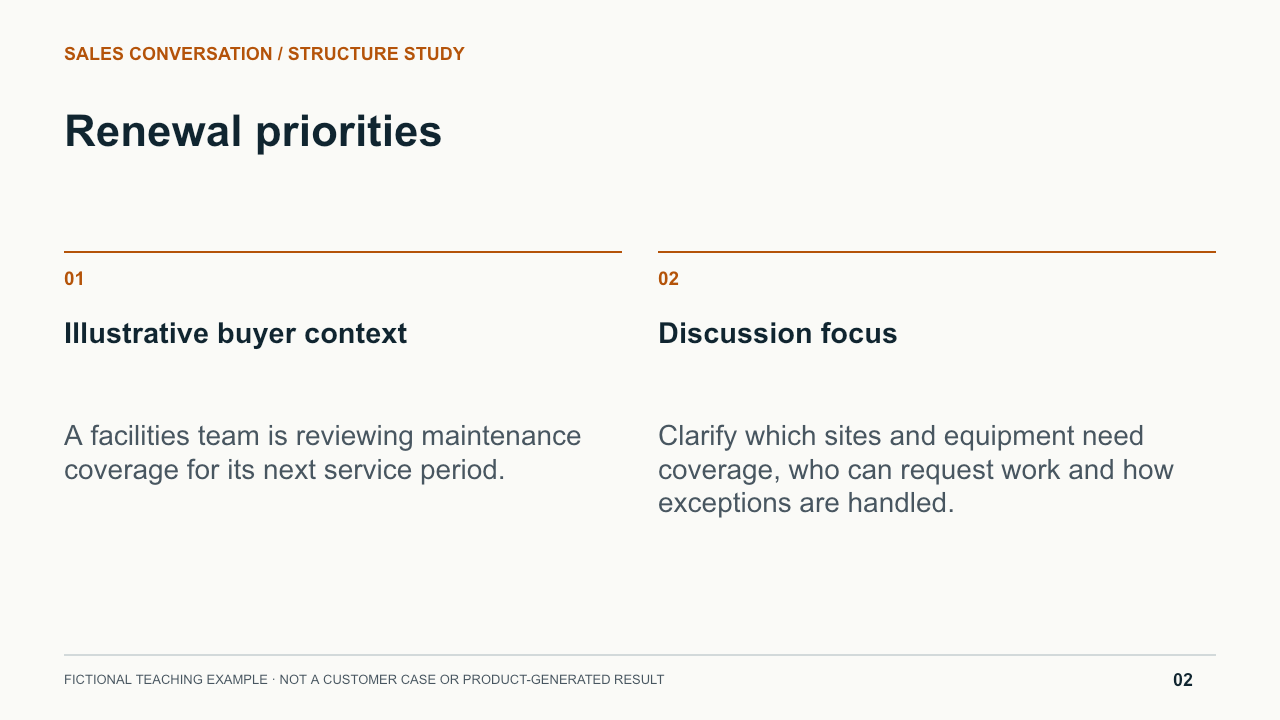
Fictional teaching example—not a customer case or product-generated result
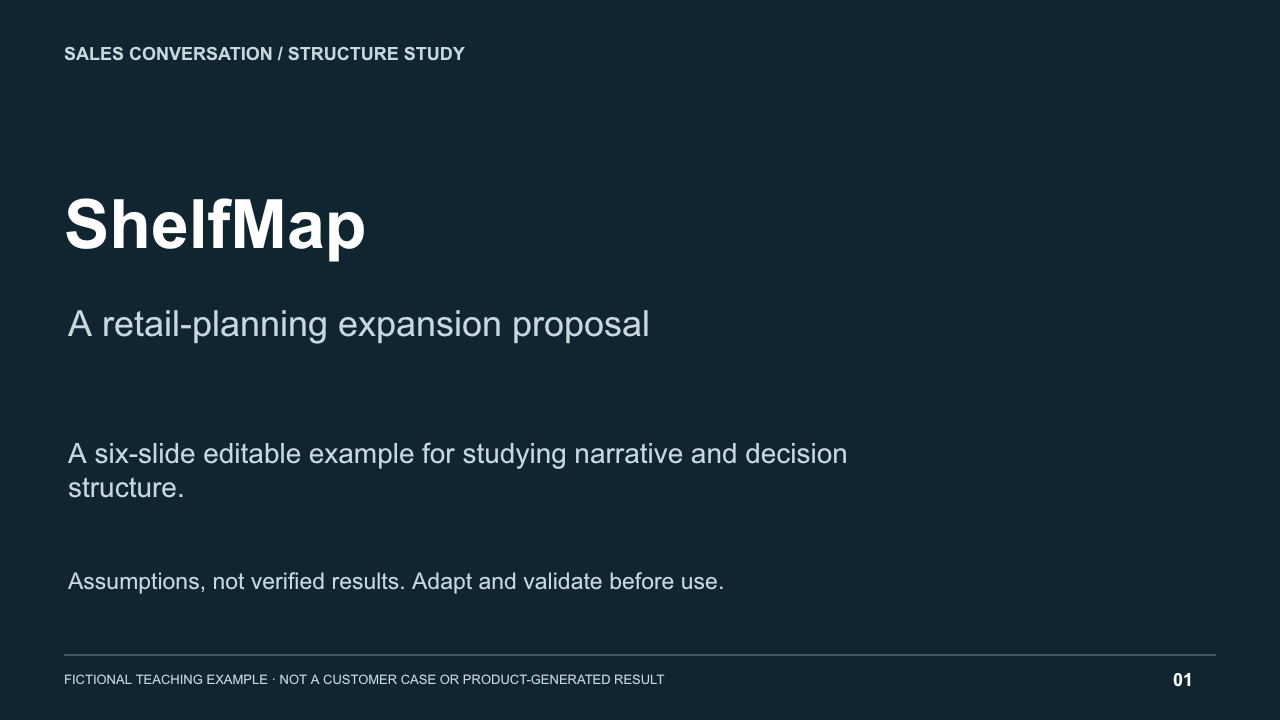
The cover identifies the fictional scenario and the purpose of the six-slide study.
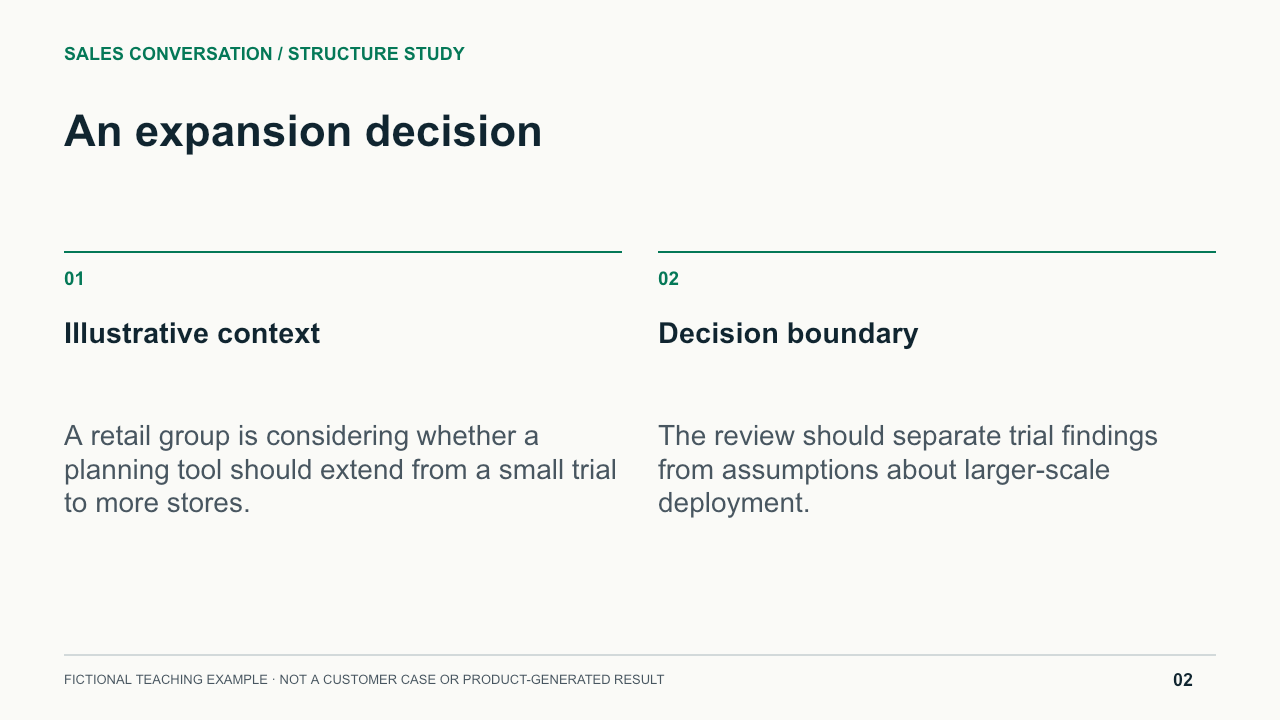
Slide 2 — An expansion decision
An expansion deck has a different job from a first-meeting pitch: it must make scaling assumptions explicit.
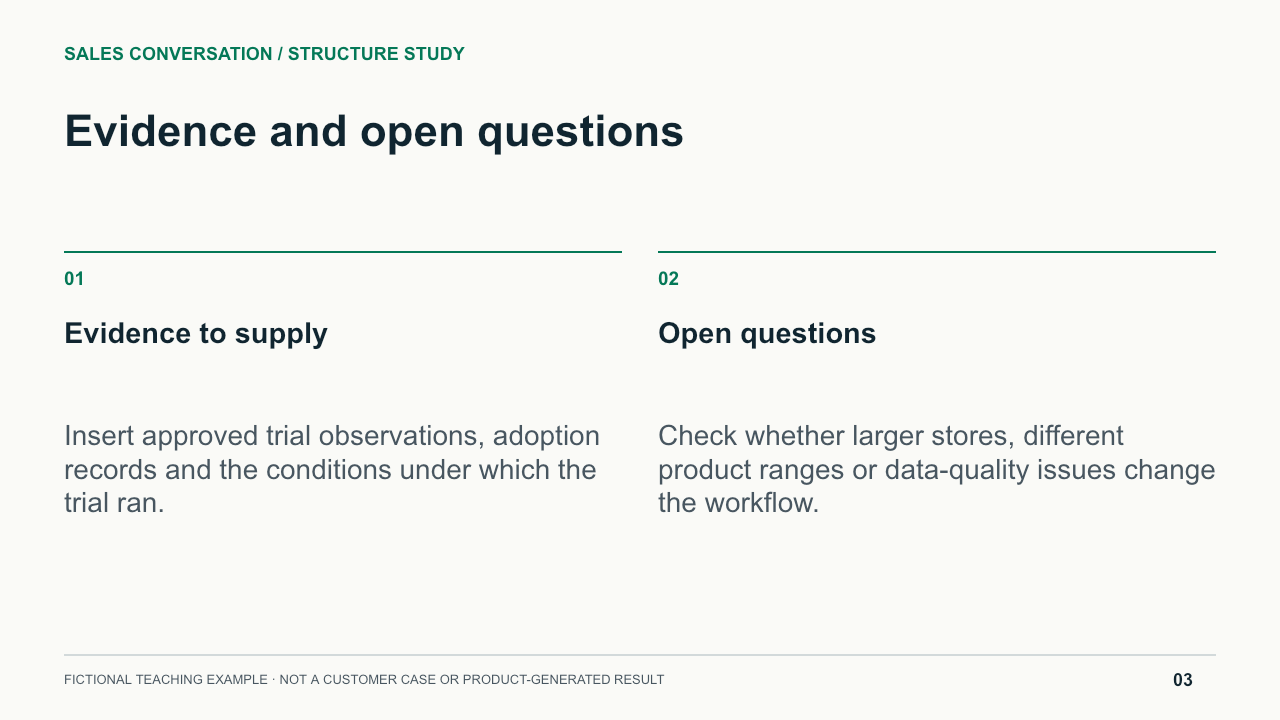
Slide 3 — Evidence and open questions
The sample requests real evidence rather than manufacturing a successful pilot.
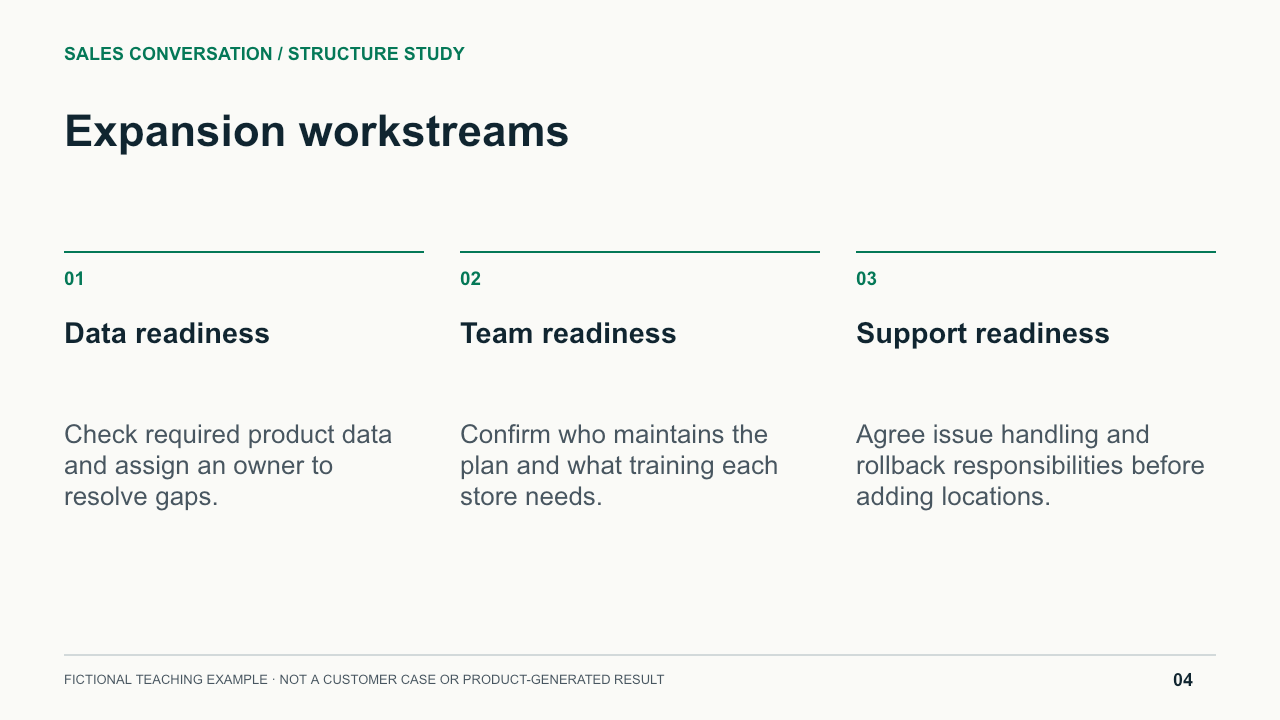
Slide 4 — Expansion workstreams
Operational readiness belongs next to the commercial proposal, not in an unrelated feature list.
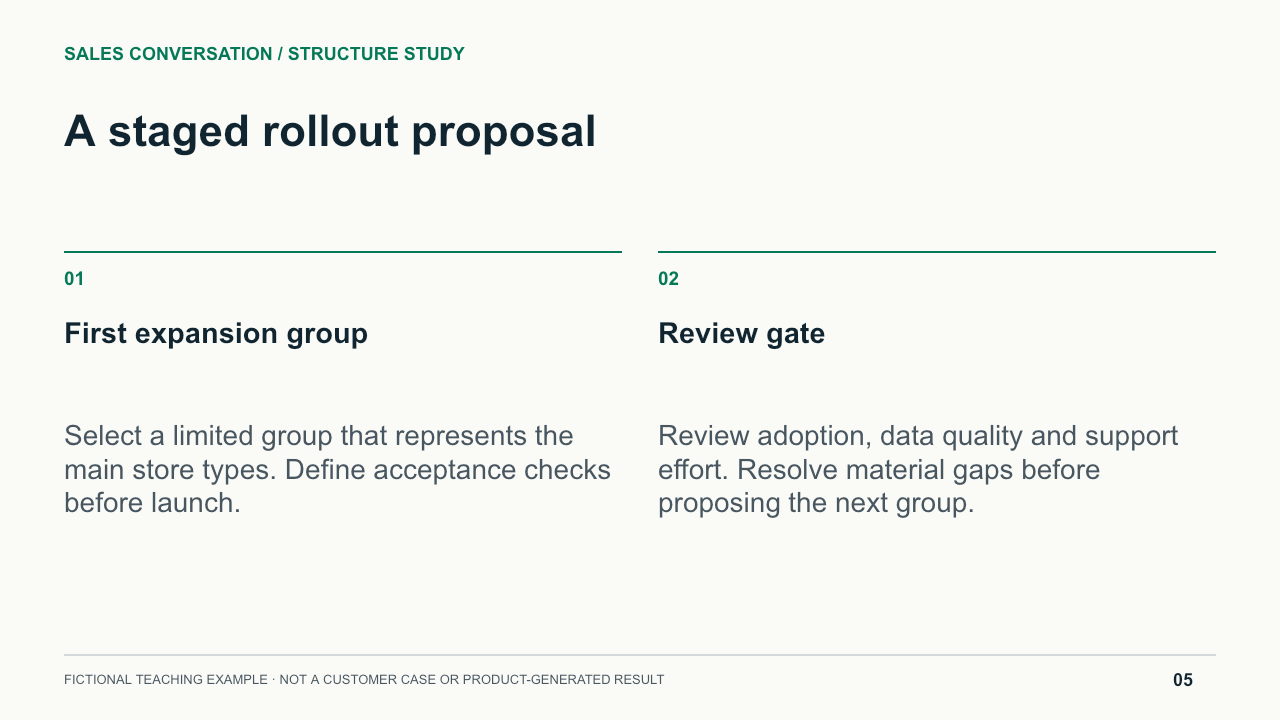
Slide 5 — A staged rollout proposal
A staged plan gives the buyer a reversible decision. The timing remains subject to review.
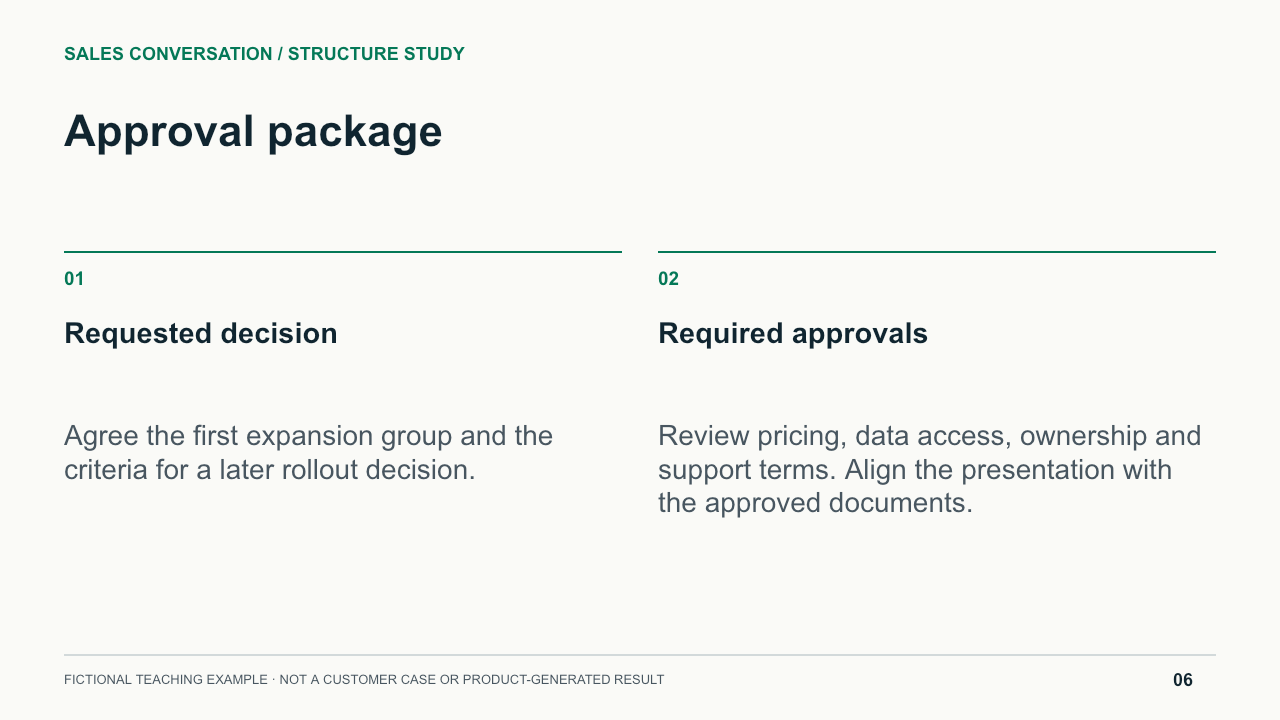
Slide 6 — Approval package
The close links the decision to conditions, without promising business results.
Adapt the decision—not just the cover
For a real sales presentation, obtain permission to use account information, cite approved evidence and make ownership and exclusions explicit. Replace the sample next step with the action your buyer can actually approve. If you use the generation workflow, provide those approved materials and review the exported deck before sending it.
Reuse: you may download and adapt these teaching assets for personal or commercial presentations. Do not present the fictional scenarios as real customer evidence or verified results. No third-party endorsement is implied.
Questions about these examples
How is a sales deck different from a pitch deck for investors?
A sales deck helps a buyer evaluate a purchase, renewal or rollout. An investor pitch discusses a business, its assumptions, evidence and funding context. The examples use different closing decisions for that reason.
Can I reuse the layout for my own proposal?
Yes. You may adapt these fictional teaching files for your presentations. Replace the sample content, remove any implication of verified results and check factual, contractual and brand requirements.
Why do the examples avoid ROI figures?
There is no real customer dataset behind them. A real ROI argument requires an agreed baseline, costs and documented assumptions; inventing a percentage would make the example misleading.